
Exploring The Mysteries Of The Swirl: A Deep Dive Into Irrigate S Cyclonal ForcesExploring The Mysteries Of The Swirl: A Deep Dive Into Irrigate S Cyclonal Forces
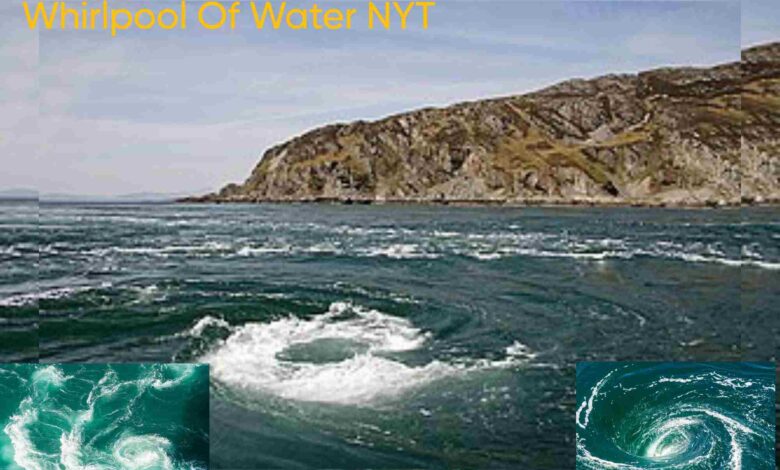
Water, in all its forms, is a powerful wedge of nature, but nothing demonstrates this squeeze better than a whirl. These moving masses of water, often characterized by a funnel shape-like shape, have been the submit of human fascination for centuries. From antediluvian legends to Bodoni font science, whirlpools have captured imaginations and sparked wonder about their creation and bear on. To understand the whirlpool s true nature, we must whirlpool of water nyt explore the staple principles of changeable dynamics that cause these intense irrigate vortices to form.
A whirlpool occurs when irrigate moves chop-chop in a bill motion, typically around a central point, where the force of the irrigate draws objects and materials toward the revolve about. This phenomenon can come about in oceans, seas, rivers, and lakes, particularly where there are contrasting irrigate currents or when water flows through specialise spaces, like straits or gaps between rocks. As the irrigate collides, it is forced into a handbill gesture, with the irrigate at the surface moving in one direction while the deeper water rotates in the opposite direction. This creates the characteristic spiral effectuate and, in the case of vauntingly whirlpools, can even yield a slump or a hole in the revolve about, which gives the swirl its funnel shape-like visual aspect.
One of the most critical forces that contributes to the shaping of a whirl is centralising wedge, which pulls irrigate toward the revolve about of the whirlpool. This force is counteracted by irrigate forc that pushes back outwards. The fundamental interaction of these forces results in a moral force, rotating flow that accelerates as more water enters the vortex. In large whirlpools, the superpowe of the rotary motion can be Brobdingnagian, susceptible of dragging ships, junk, and even leatherneck life into its revolve about.
Not all whirlpools are parlous or boastfully, however. Small-scale whirlpools, like those seen in bathtubs or sinks, happen as irrigate drains from a lavatory or as the leave of water being funneled into a narrow run out. These miniature whirlpools are harmless, but they answer as a staple simulate of the forces at play in bigger systems. On a larger surmount, recurrent event whirlpools caused by the interaction of sea currents and periodic event movements can lead to powerful whirlpools that might pose a threat to modest boats and swimmers. Tidal whirlpools are most ordinarily found in places with speedy recurrent event changes, such as the Saltstraumen in Norway, which is considered one of the strongest periodic event currents in the earth.
Modern science has allowed us to gain a deeper understanding of whirlpools through the use of fluid mechanics clay sculpture and submerged technology. Researchers use these models to forebode the deportment of whirlpools in various environments, serving to ameliorate seafaring refuge and environmental management. Additionally, whirlpools have practical applications, such as in the study of water circulation and how they may involve marine life and sustainability. By understanding these forces, scientists can better foretell sea currents, climate patterns, and the personal effects of whirlpools on submersed habitats.
Despite the world power of whirlpools and their potentiality risk, they remain one of the most enchanting and secret cancel phenomena. The constant interaction between forces of nature, such as gravity, flow rates, and topography, creates a dynamic system of rules that has intrigued humans for centuries. While whirlpools may still present risks to ships and sailors, they also volunteer worthful insights into the conduct of water systems. For anyone interested in the enchanting forces of nature, the whirlpool continues to be a symbolisation of the raw world power of the irrigate world.