
20 EXCELLENT IDEAS FOR CHOOSING FIRE EXTINGUISHER SERVICE IN BIRMINGHAM20 EXCELLENT IDEAS FOR CHOOSING FIRE EXTINGUISHER SERVICE IN BIRMINGHAM
Top 10 Tips In Assessing The Regulatory Compliance Of PAT in Birmingham
The regulatory landscape for Portable Appliance Testing (PAT) in the UK is fundamentally different from the prescriptive requirements governing fixed electrical installations or fire safety equipment. The PAT is not governed by British Standards or third-party certifications, but rather a more comprehensive health and safety framework. This emphasizes risk assessments and duty of responsibility, as opposed to mandatory periodic testing schedules. Electricity at Work Regulations (1989) state that electrical systems, including portable equipment, must be regularly maintained to avoid harm. The Regulations don't specify the method or frequency of testing, nor how to achieve this maintenance. This places the onus on the dutyholder (typically the employer) to conduct a suitable and sufficient risk assessment to determine an appropriate maintenance and inspection regime. Compliance can't be proven by just a bunch of test certificate. Instead, it must include a demonstrated process of decision-making based on risk, competent execution, and thorough documentation.
1. Electricity at Work Regulations: 1989
Regulation 4(2) is the cornerstone of compliance for PAT testing. This states: As may be required to prevent harm, all systems are to be maintained so that they can be prevented, as far it is reasonable practicable. It is an absolute obligation on the part of employers and duty holders to maintain their electrical equipment. The term "systems" includes portable appliances. Importantly, the regulations do NOT mention "PAT Testing"; they mandate "Maintenance," an encompassing concept which includes visual inspections, user checks, combined inspection and testing, as well as a wider concept of maintenance. The frequency and type of maintenance required are determined by the risk assessment, not by a fixed legal timetable.
2. Act 1974: The role of Health and Safety at Work Act 1974
The Health and Safety at Work, etc. The 1974 Act is the main legislation which establishes employers' general duties towards their employees and other people. According to Section 2 of this Act, employers must ensure that all employees are safe and healthy, in the best way possible. Including electrical equipment in safe work systems and plants is part of this. Section 3 extends this duty to persons not in their employment, such as visitors, contractors, and members of the public. The PAT testing process is a key method of fulfilling these general duties by providing a structured approach to ensuring electrical equipment is safe.
3. Guidance and Best Practice: The IET Code of Practice for In-Service Inspection and Testing of Electrical Equipment
The Institution of Engineering and Technology Code of Practice, while not a law in itself, is widely accepted as the benchmark for best practices when it comes to PAT testing. It offers detailed advice on how to create a maintenance regime that is compliant.
Definitions of appliance categories and types.
Detailed procedures for formal visual inspections and combined inspection and testing.
Based on equipment type and environment, the recommended initial inspection and testing frequencies.
Test results are graded as pass/fail.
Courts and Health and Safety Executive Inspectors (HSE), who will judge whether the maintenance regime of a dutyholder is "suitable and enough," will use this standard. A deviation from the code that is not accompanied by a documented and robust risk-based justification can be interpreted as non-compliance with the regulations.
4. The Primacy of Risk Assessment
HSE has explicitly advocated a PAT-based risk-based testing approach. It is moving away from outdated concepts of blanket annual testing. The dutyholder must conduct a risk assessment to determine the need, nature, and frequency of inspection and testing. Key factors influencing this assessment include:
Equipment type: In a low-risk, double-insulated environment (Class II), a Class II appliance may only require a visual inspection. However, a Class 1 appliance in a workshop might need to undergo regular formal testing.
Environment: Construction sites, warehouses, and workshops are high-risk environments. Offices, hotels and other places of business are typically lower-risk.
Equipment users: Are they trained staff members or the general public?
Previous history: Is the appliance new or frequently damaged?
This risk assessment is what defines a compliant system, not the number of tests performed.
5. The Concept of Competence for Testers
Regulation 16 of the Electricity at Work Regulations (1989) states that anyone working with electrical equipment must have the required technical knowledge to avoid harm. The "competence" required for PAT testing does not require formal qualifications, but the tester should have:
Electrical knowledge is important.
Practical experience and understanding of the system they are working on.
Understanding the hazards involved and the precautions needed.
Ability to correctly use the test equipment and interpret the results.
City & Guilds2377 is a popular qualification which provides excellent training. However competence can be obtained through alternative means. The dutyholder must be able to demonstrate that the person conducting the testing is competent.
6. Documentation requirements and record keeping
The Electricity at Work Regulations don't require the keeping of records. According to Regulation 29, it is possible to defend yourself by proving that you have taken all reasonable measures and exercised due diligence to avoid committing a crime. The primary evidence for due diligence are comprehensive records. A compliant record-keeping system should include:
An asset register of equipment.
A record of the risk assessment and the resulting maintenance plan.
Detailed reports are provided for each formal test and inspection, which include the following: appliance description and details, test results and pass/fail grades, next scheduled test date and tester identification.
These records must be readily available for inspection by the HSE or local authorities.
7. Appliance Labelling and Identification
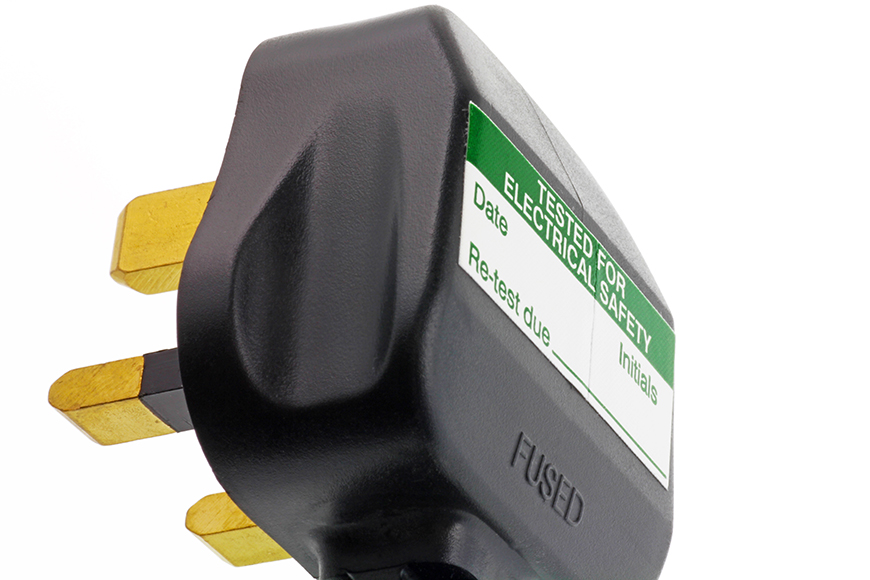
Effective labelling is essential to a compliance PAT system. Each appliance which has undergone an official combined inspection/test should be labelled:
The unique ID number of the asset that links it to the record.
The test date.
The next date of testing (or reinspection).
The name or identifier used to identify the tester.
The label is a visible indicator that shows users and inspectors the compliance status of an appliance. Labels must be durable, nonmetallic and nonconductive.
8. The HSE Enforcement Policy and "Mythbusting"
The HSE has actively worked to clarify misconceptions about PAT testing. They emphasize that:
No legal requirements exists for equipment to be tested annually.
There is no legal requirement that businesses use third-party contractors if their staff are competent.
Visual inspection is often more important than electronic testing and can identify the majority of faults.
A law enforcement officer will be looking for a risk based approach. A company that blindly tests all equipment each year without a supporting assessment of risk may be viewed as being less favorable than a firm that can justify the longer testing intervals for low-risk gear through a robust analysis.
9. Interplay with Other Laws: PUWER
The Provision and Use of Work Equipment Regulations 1998 (PUWER) also applies to portable appliances. PUWER specifies that the work equipment used must be appropriate for its intended usage, maintained in a state of safety, and inspected periodically to ensure its safety. Regulation 6 specifies that inspections are necessary when the safety of electrical work equipment is affected by installation conditions. The PUWER inspection and maintenance regulations for electrical work equipment are met by PAT testing, which is a critical method.
10. Due Diligence and Insurance Implications
Insurance companies can have their own requirements, even though the law is based upon risk assessment. As a condition to coverage, an insurance policy could stipulate that PATs are conducted by a third party annually. Failure to adhere to this could invalidate a claim. Insurance companies and HSE will also scrutinize the dutyholder’s risk assessment and PAT testing records in the event that an electrical incident occurs. A risk-based, well-documented system is a powerful defence to prosecution or invalidated claims. Take a look at the most popular Birmingham electrical testing for blog tips including extinguisher service, fire extinguisher using, extinguisher inspections, electrical fire, fire extinguisher service birmingham, fire extinguisher service near me, a fire extinguisher, fire extinguisher company, fire electrical extinguisher, fire extinguisher in electrical fire and more..
Ten Tips For The Regulatory Compliance In Fire Extinguisher Maintenance in Birmingham
The legal framework that governs maintenance of fire extinguishers in the UK represents a comprehensive system that ensures the reliability of equipment and safety for the public through clearly specified legal obligations, technical standards and certification schemes. Fire extinguisher servicing is subject to strict legal requirements which are defined in the Regulatory (Fire Safety) Order of 2005. Technical standards and third party certification schemes provide a clear compliance PAThway. This multi-layered system places direct responsibility on the "Responsible Person" in each facility to ensure appropriate maintenance and provides clear guidelines for demonstrating the due diligence. Knowing this framework not only helps maintain legal compliance but ensures that the equipment used to safeguard properties and lives will function according to the plan in case of emergency.
1. The Regulation Reform (Fire Safety) Order 2005 (FSO) in Birmingham
The Fire Scotland Act 2006 and Northern Ireland have similar regulations. Article 17 stipulates that all equipment used in fighting fires is required to be "subjected to a proper maintenance program and kept in a good condition and in a good working order and in good condition." The Order places the responsibility for this on the "Responsible Individual" (usually the employer or owner, or owner of the property). The person who is responsible for this is legally accountable for ensuring the correct servicing procedures for every piece of fire protection gear that includes portable extinguishers are established and maintained.
2. British Standard BS 5306-3 : 2017
This standard is a guideline that will guide the FSO and outlines the guidelines for maintaining and putting into operation portable fire extinguishers. It outlines the various kinds of services: basic (annual visual inspection and easy inspections) as well as extended service (discharge test and internal examination every five years for foam, water and powder extinguishers) and overhaul (pressure test and internal examination every 10 years for CO2 extinguishers). As per the law, the BS 5306-3 is the benchmark when demonstrating the existence of a "suitable maintenance procedure".
3. Third-Party Certification Schemes (BAFE SP101) in Birmingham
Although it is not legally required the presence of a BAFE (British approvals for fire equipment) SP101 certified is the strongest demonstration of due diligence. This UKAS-accredited certification scheme independently ensures that the company is in compliance with rigorous standards for technician competence as well as equipment, quality of work and business procedures. BAFE certification has been accepted by the courts, fire authorities and insurers as evidence that a company is in compliance with FSO standards for maintenance.
4. Fire Risk Assessments: Their Role in Birmingham
Fire Risk Assessments are the source of information that informs any decision related to the safety of fire, which includes those regarding extinguisher maintenance. The Fire Risk Assessment (FRA) must specify the nature, size and Birmingham of equipment for fighting fires and its maintenance requirements. FRAs must be reviewed frequently, especially in the event of a change in circumstances. All modifications made must be recorded in the service schedule. The reports provided by servicing providers can be a valuable source of data.
5. Documentation needs and evidence requirements in Birmingham
For compliance reasons, it's essential to keep a complete record of the service. Following each service, the service provider must provide an extensive service report with details of the company and details of the engineer. The inspection of these documents by enforcement authorities and insurance companies (Fire and Rescue Services as well as Insurance Providers) is required. If there is no documentation, even if service has been performed the enforcement action could be taken.
6. Enforcement Mechanisms and Penalties in Birmingham
Local Fire and Rescue Authorities carry conduct compliance audits and possess substantial enforcement powers. If they fail to meet the requirements for servicing local Fire and rescue Authorities can issue: Amendment Notices that demand specific changes within a certain time frame, Enforcement Notices that mandate specific improvements or, in the event that the issue is serious, Prohibition Warnings which immediately stop or block the Birmingham. The courts have the power to impose unlimited fines, and even a two-year prison sentence for serious offenses.
7. Insurance Information in Birmingham
Commercial insurance policies often include an obligation to comply with the fire safety law. Inadequate servicing records or using companies that are not compliant can void insurance coverage following a fire incident. Insurance assessors often request service documentation during the process of processing claims. Insurers may also require certification standards like BAFE SP101 as a prerequisite of coverage under insurance, particularly for large commercial policies or buildings with high risk.
8. The Technician Competence Requirements in Birmingham
The FSO requires that maintenance be done by "a competent person." While not legally defined, competence generally includes: formal training on BS 5306-3, manufacturer-specific equipment training, practical experience, and understanding of relevant regulations. Through regular audits and assessments, third-party certificate schemes like BAFE SP101 verify technician competence.
9. Environmental Compliance (Duty to Care) in Birmingham
Environmental law, and in particular the Environmental Protection Act of 1990 is the law that governs how to dispose of waste. Registered waste carriers must provide Waste Transfer Notes. Responsible individuals are accountable to ensure that their service provider is legally disposing of the waste.
10. The frequency and scope of service requirements in Birmingham
To ensure conformity, BS 5306-3 service frequencies are adhered to. This includes: Basic service annually for all extinguishers, extended service every 5 year for extinguishers that are made of foam, powder, or water, and overhauls once every 10 years for units that use CO2. It is also the duty of the responsible person to ensure that monthly visual inspections are conducted (often performed by employees). This will check for obvious problems, for example, damage, obstruction or a reduction in pressure. The combination of professional servicing along with user-specific checks makes for an effective maintenance system. View the top rated Birmingham fire extinguisher checks for website examples including fire extinguisher using, extinguisher inspections, fire service, electrical fire, fire extinguisher for electrical fire, extinguisher company, electrical fire, fire and extinguisher, extinguisher testing, extinguisher fire extinguisher and more. More broadly, view the recommended fire extinguisher maintenance for more.


